ServicesWater testing
Water Testing in Euless
Find out what is actually in your tap water before you spend money on equipment. We show up inside a set arrival window, take readings at your sink, send samples to a lab when it makes sense and go over every number with you in plain words.
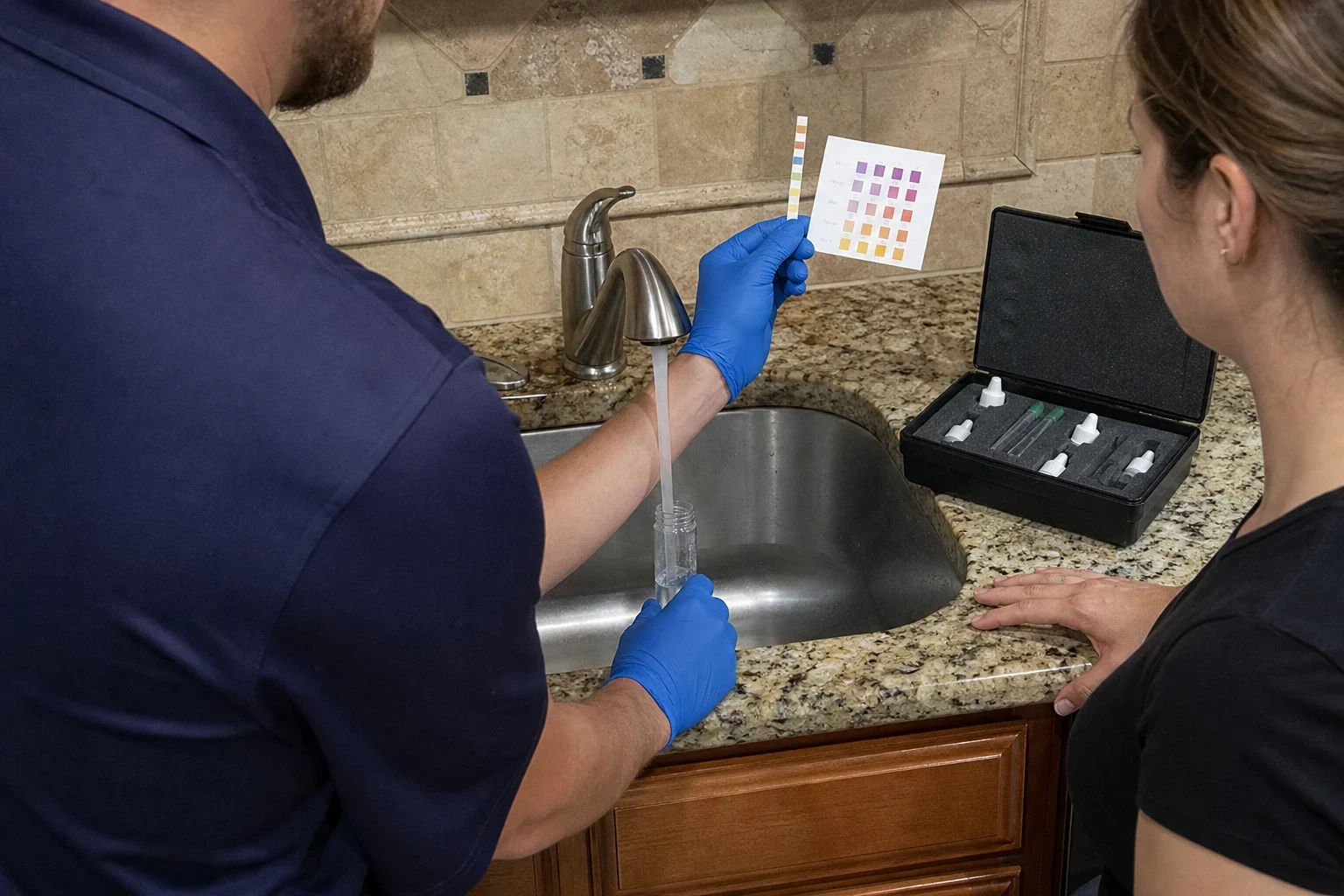
Know your water first, then decide
A water test tells you what is coming out of your tap. That includes chlorine, hardness, iron, pH and total dissolved solids. If your home has older plumbing, it can also include lead and copper.
We test first because the right fix depends on the result. Bad taste usually points to carbon filtration. Orange stains point to iron. Spots on glasses might mean hardness, or might not. Guessing leads to people buying a softener they never needed.
You get a time window when we book, a call if that window moves, and a clear date for when lab results should be back.
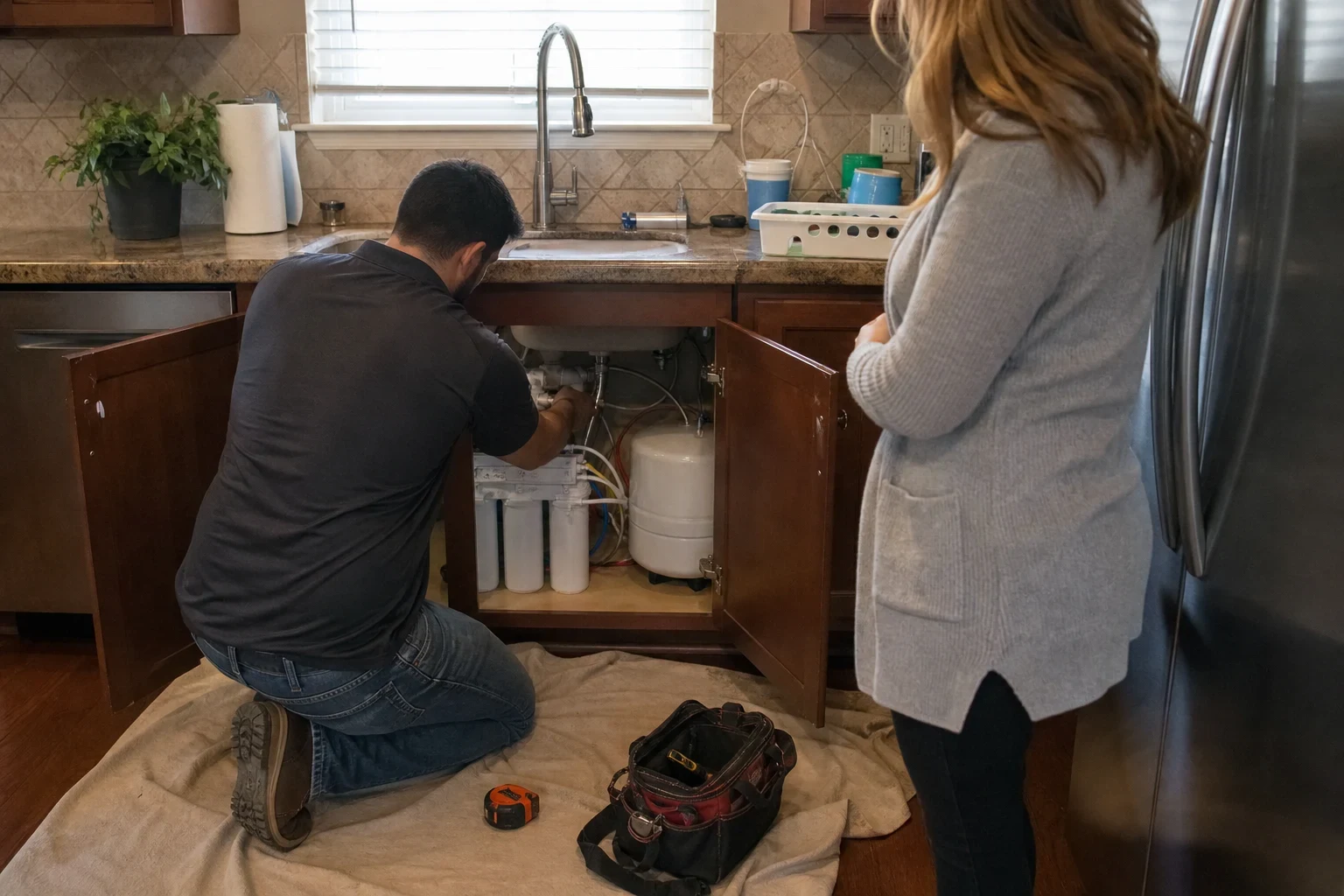
What a water test includes
- 01
On-site tap tests
We check chlorine, hardness, pH, iron and total dissolved solids right at your kitchen sink. You see the readings as we take them.
- 02
Lab samples when they matter
For lead, copper, bacteria or anything an on-site kit cannot measure well, we collect samples and send them to an independent lab. We tell you which tests we suggest and why before we draw a drop.
- 03
A look at your plumbing
We note the pipe material where it is visible and the age of your water heater. Old galvanized lines and brass fittings change what we test for.
- 04
Results in writing
You get the readings in writing, with each number next to the level it is usually compared against. No jargon left unexplained.
- 05
An honest recommendation
Sometimes the answer is to do nothing. If your water tests fine, we say so. If it does not, we explain which option fits, from an under-sink reverse osmosis unit to whole-house carbon filtration.
Questions about Water testing?
Call(817) 720-9059Signs it is time to test your water
Chlorine taste or smell
City water is treated with disinfectant, and some people notice it more than others. A test shows how strong it is at your tap and whether a carbon filter would help.
Stains in sinks and tubs
Rusty orange or brown marks often mean iron. Blue-green stains can point to copper from your pipes. Both are worth measuring before you pick a filter.
An older home
Houses with original plumbing can have lead solder or old fittings. A lab test for lead and copper is a simple way to find out.
Scale and spotty dishes
White crust on faucets and shower glass makes people think they need a softener. Test hardness first. It may be lower than you expect.
A new baby or a health change
Many families want a clear baseline when someone in the house is more sensitive. Testing gives you real numbers instead of worry.
Someone just tried to sell you a system
If a salesperson ran a quick color test and handed you a big quote, a second test from someone else is a fair step.
How the visit goes
- 1
You call and pick a window
We set an arrival window that fits your day and tell you how long the visit should take. If we are running behind, you hear from us before the window closes, not after.
- 2
We test at the tap
We run the water, take readings and show you each one. Most on-site testing takes well under an hour. We work at the sink and clean up after ourselves.
- 3
Samples go to the lab
If lab tests make sense, we collect the bottles and send them out. We give you the expected date the results come back, and we let you know if the lab is slower than usual.
- 4
We go over the results
We explain what each number means for your home and what, if anything, you should do. There is no pressure to buy on the spot.
What affects the price of a water test
A basic on-site test and a full lab panel are very different jobs. We explain the options by phone and give you the price before we schedule. You decide which tests to run.
- On-site only or lab work too
- Tap readings at the sink cost less than lab analysis. Lab panels for lead, copper or bacteria add the lab's own fees.
- How many things we test for
- A single question, like hardness before a softener, is a smaller job than a full baseline panel.
- Number of taps
- Some homes need samples from more than one fixture, such as a kitchen and a far bathroom, to check for problems in the pipes.
- Follow-up testing
- If a result is borderline, a retest later can confirm it. We only suggest one when it will change your decision.
Water testing questions
Isn't city water already tested?
Yes, the water utility tests its water and publishes a yearly report. That report covers the water leaving the treatment system. It does not cover what happens in the pipes inside your home, which is where lead, copper and some taste problems come from.
How long until I get lab results?
On-site readings are ready during the visit. Lab results take longer, and the wait depends on the test and the lab's workload. We give you an expected date when we collect the samples and update you if it changes.
Do I need to be home?
Yes, someone needs to let us in and give us access to a kitchen sink. If a lab test needs water that has sat in the pipes overnight, we tell you ahead of time so you do not run the tap that morning.
Is the test just a lead-in to a sales pitch?
No. You get the readings and our honest read on them. If nothing in your water needs fixing, we say that and pack up. When we do suggest equipment, we point to the number that led us there.
Should I test before getting a water softener?
Yes. Hardness varies, and many homes do not need a softener at all. We only recommend one after a hardness test supports it, and our water softeners page explains how we decide.
Do you test outside Euless?
We test homes in Euless and nearby towns like Bedford, Hurst, Grapevine and Colleyville. Ask when you call and we will tell you which arrival windows are open for your area.
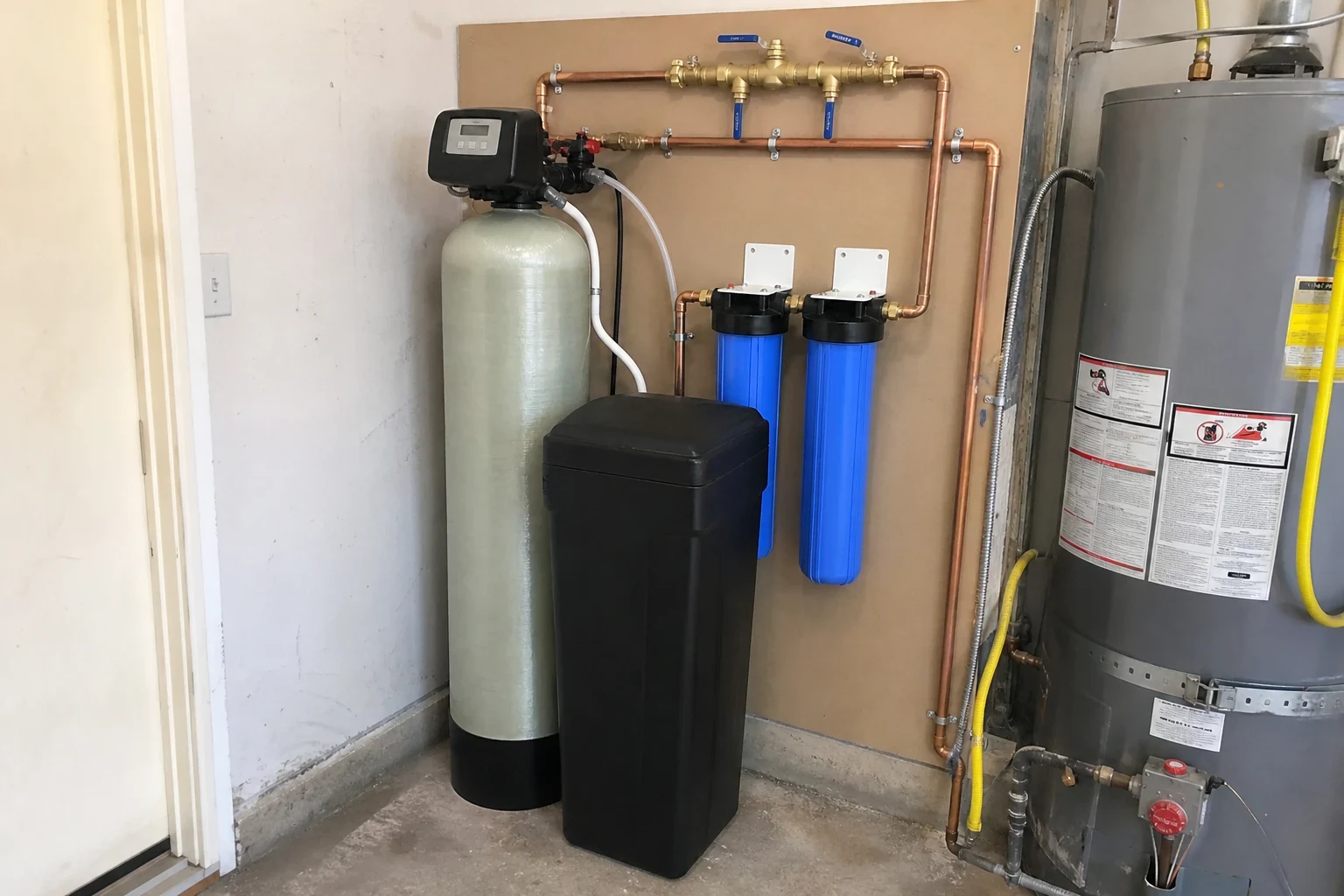
Get real numbers on your water
One visit tells you whether you need a filter, which kind and why. We give you a window, keep you posted and explain the results in plain words.